Beyond Logo: 6 Brand Identity Elements Every Founder Needs Before Starting a Wellness Brand
A logo is just one piece. These 6 brand identity elements determine whether your wellness store builds trust — or loses it in seconds.

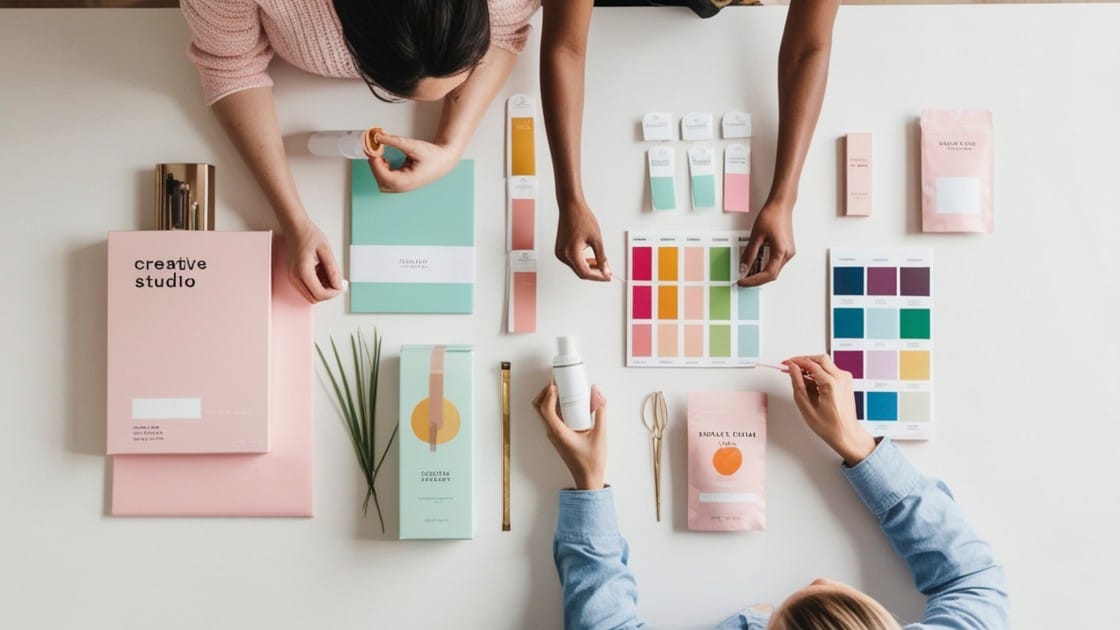
A wellness brand identity is more than a logo. Before building your website or store, you need six foundational elements: a brand positioning statement, a defined visual identity system, a brand voice and tone guide, a core messaging framework, a brand story, and a clear customer avatar. Without these, every design decision becomes guesswork — and your brand ends up looking and sounding like everyone else.
Most wellness creators make the same mistake. They pick a colour palette, get a logo designed on Canva or Fiverr, set up a Shopify store, and call it a brand.
Then they wonder why their audience isn't buying. Why their content feels inconsistent. Why their store looks fine but doesn't convert.
The logo was never the problem. The problem is that they built the roof before the foundation.
A logo is a symbol. A brand is a system — a carefully constructed set of decisions that shapes how your audience feels every time they encounter you, whether that's on Instagram, your website, your product label, or a WhatsApp message.
In the wellness industry especially, where trust drives purchasing decisions more than almost any other category, brand identity isn't optional. It's the reason someone chooses your supplement over the 30 others in the same category. It's the reason they subscribe. It's the reason they refer.
This guide breaks down the 6 brand identity elements every wellness founder needs to define before they build a website, open a store, or order a single product label. Get these right and everything downstream — design, copy, marketing, content — becomes faster, cheaper, and more effective.
What is Wellness Brand Identity?
Wellness brand identity is the complete system of visual, verbal, and strategic decisions that define how a health or lifestyle brand presents itself — consistently and intentionally — across every platform, product, and customer interaction.
It includes your visual design system (logo, colours, typography, photography style), but also your positioning, your voice, your story, your messaging, and your customer understanding.
Think of it this way: your logo is what people see. Your brand identity is what they feel. And in wellness, feeling is what sells.
Why Brand Identity Matters Before You Build Anything
Here's the practical reality: every design, copy, and marketing decision flows from your brand identity.
If your brand identity is undefined, your designer has nothing to work from. Your copywriter guesses at your tone. Your content looks different every week. Your website feels generic. And your audience — consciously or not — senses the inconsistency and doesn't trust you enough to buy.
Consider what's at stake in wellness specifically:
• Consumers in the wellness space are highly educated and increasingly sceptical of brands that feel inauthentic
• According to Edelman's Trust Barometer, brand trust is now the second biggest driver of purchase decisions globally, behind only product quality
• In a crowded wellness market where dozens of brands sell virtually identical products, brand identity is often the only real differentiator
Wellness founders who define their brand identity before launching save an average of 3–6 months of rebranding work and tens of thousands of rupees in redesign costs. More importantly, they build brands that compound — where every piece of content, every product, and every customer interaction reinforces the same story.
The 6 Wellness Brand Identity Elements You Need First
Element 1: Brand Positioning Statement
This is the single most important strategic document your brand will ever have — and most creators never write one.
A brand positioning statement defines:
• Who you serve (your specific audience)
• What you offer (your product or service category)
• What makes you different (your key differentiator)
• Why that difference matters (the benefit to your customer)
Here's a simple formula to write yours:
"For [specific audience], [Brand Name] is the [category] that [key differentiator] because [reason to believe]."
Example for a women's hormonal wellness brand:
"For women navigating PCOS and hormonal imbalance, Bloom is the wellness supplement brand that combines clinical-grade ingredients with community-led support — because managing your hormones shouldn't feel like a solo battle."
Your positioning statement is never used word-for-word in public-facing copy. But it becomes the north star every team member, designer, and copywriter refers back to. If a decision feels off-brand, the positioning statement is what you check it against.
Important: Your positioning must be specific enough to exclude people. A brand that tries to speak to everyone ends up resonating with no one. In wellness, the tighter your positioning, the stronger your community becomes.
Element 2: Your Customer Avatar (A.K.A. Brand Audience Profile)
You cannot build a consistent brand identity without knowing exactly who you're building it for.
Your customer avatar is a detailed, specific profile of your ideal buyer — not a demographic range, but a fully realised human being with a name, a daily reality, specific frustrations, and a clear aspiration.
A strong customer avatar covers:
- Core Demographics:
• Age, gender, location, occupation, income level - Psychographics (more important than demographics):
• Values and beliefs (what does she stand for?)
• Daily frustrations (what is she struggling with right now?)
• Aspirations (what does she want her life to look like in 12 months?)
• Information habits (where does she learn? Who does she trust?)
• Buying triggers (what makes her actually purchase?) - Wellness-Specific Attributes:
• Her current relationship with her health (proactive vs reactive)
• Her past experience with wellness products (sceptical or loyal?)
• Her primary wellness concern (gut health, sleep, skin, hormones, fitness)
Why this matters for brand identity: every visual, verbal, and strategic decision you make should be filtered through one question — "Would MY customer connect with this?" Not everyone. Not a general audience. Her.
For example, a skin science brand targeting women 22–35 who research ingredients before buying will build a very different visual identity, colour palette, and tone of voice than a family wellness brand targeting moms who prioritise ease and naturalness.
Same category. Completely different brand.
Element 3: Visual Identity System (Not Just A Logo)
This is where most creators start — and where they stop too early.
A visual identity system is the complete set of visual decisions that make your brand instantly recognisable across every platform and format. It includes five components:
Component 1 — The Logo Suite
Your logo is not one file. A complete logo suite includes:
• Primary logo (full version)
• Secondary logo (horizontal or stacked alternative)
• Icon or monogram (for small formats — favicon, profile picture, product labels)
• Dark version and light version of each
Component 2 — Brand Colour Palette
A strong brand colour palette includes:
• 1–2 Primary brand colours (dominant, used most)
• 1–2 Secondary colours (supporting, used for accents and contrast)
• 1 Neutral (for backgrounds and text — usually white, off-white, or a warm grey)
Colour psychology matters in wellness more than almost any other category:
• Greens and earthy tones signal natural, organic, and clean
• Soft pinks and mauves signal femininity, care, and hormonal wellness
• Deep blues and purples signal calm, sleep, and mental wellness
• Blacks and neutrals signal clinical, premium, and science-backed
• Warm whites and creams signal ritual, slow living, and luxury
Choose colours that match what your audience wants to feel — not just what you personally like.
Component 3 — Typography System
Use no more than two typefaces:
• A display/heading font (personality-driven — this is your brand's visual voice)
• A body/text font (clean and legible — this is your brand's workhorse)
Typography carries emotional weight. A serif font feels authoritative and established. A clean sans-serif feels modern and approachable. A soft script feels intimate and personal. Choose based on your brand personality — not based on what looks pretty in isolation.
Component 4 — Photography and Imagery Style
This is one of the most overlooked components of visual identity — and one of the most powerful.
Define:
• The mood of your imagery (clinical and clean? warm and earthy? bold and energetic?)
• The subject of your imagery (product-forward? lifestyle? people? nature?)
• The colour treatment (bright and airy? dark and moody? warm-toned? high contrast?)
Brands that have a consistent photography style are immediately recognisable in a scroll. Brands without one look different every week and lose the compounding recognition effect.
Component 5 — Brand Pattern and Graphic Elements
Optional but powerful: a signature graphic pattern, icon set, or texture that appears consistently across your packaging, website, and social graphics. Think of it as your brand's fingerprint.
Element 4: Brand Voice and Tone Guide
Your brand voice is how your brand sounds. It's consistent across every piece of copy — your website, your product descriptions, your emails, your Instagram captions, your WhatsApp messages.
Your brand tone shifts depending on context. Your voice on a product label might be confident and clean. Your voice in an Instagram caption might be warm and conversational. Your voice in a customer service email might be empathetic and reassuring. But the underlying personality — your brand's voice — stays the same.
Here's a simple framework to define your brand voice:
Step 1: Choose 3–4 Brand Personality Traits
These are adjectives that describe how your brand communicates.
Examples: Empowering, Clinical, Warm, Playful, Authoritative, Intimate, Bold, Gentle
Step 2: Write a "We Are / We Are Not" Statement for Each Trait
Example:
• We are EMPOWERING — we speak to our customers as capable women making informed choices
• We are NOT preachy — we never lecture or guilt-trip
• We are CLINICAL — we reference ingredients and research accurately
• We are NOT cold — we never sound like a pharma insert
Step 3: Create 3–5 Voice Examples in Context
Show actual copy examples that demonstrate your voice in action:
• Product headline example
• Instagram caption example
• Email subject line example
• Error message or 404 page example (yes, even that)
A documented brand voice guide ensures that whether you're writing the copy yourself, briefing a VA, or hiring an agency, everyone sounds like the same brand.
Element 5: Core Messaging Framework
Your core messaging framework is the strategic layer that sits between your positioning statement and your actual copy. It defines the key messages your brand communicates — consistently, across every channel.
A complete messaging framework includes:
The Brand Promise
The single, overarching statement of what your brand delivers. This is not a tagline — it's an internal compass.
Example: "We help women reclaim hormonal balance through clinically backed supplements and a community that actually understands their journey."
The Value Pillars (3–4 key messages)
These are the recurring themes that your brand consistently communicates. Every piece of content, every product description, every email should reinforce at least one of these.
Example for a gut health brand:
- Science meets simplicity — our products are clinically formulated but easy to understand
- Sustainable transformation, not quick fixes — we're for the long game
- Your gut is the root of everything — we connect gut health to energy, skin, mood, and immunity
- Community-led healing — you're not doing this alone
The Proof Points
What evidence supports your brand's claims? This could be ingredient sourcing, third-party testing, certifications, founder credentials, customer results, or clinical references. Proof points are what convert a browser into a buyer in a sceptical market.
The Elevator Pitch (10-second and 30-second versions)
How do you describe your brand when someone asks "so what does your brand do?" at a networking event — or in a bio field with a 150-character limit? Write and refine both versions before you need them.
Element 6: Your Brand Story
In wellness, story is not a nice-to-have. It is your most powerful conversion asset.
Wellness consumers don't just buy products. They buy into journeys, transformations, and missions. A brand with a compelling story creates emotional resonance that no product ingredient list ever can.
Your brand story answers three core questions:
- Why does this brand exist?
What was the problem, frustration, or experience that sparked this brand? Authenticity here matters more than drama. A real moment of struggle, discovery, or realisation is more powerful than a polished origin narrative. - Who is behind this brand and why should I trust them?
For creator-led brands especially, the founder's personal experience with the product category is one of the strongest trust signals available. Did you personally struggle with PCOS? Did you spend two years researching gut health after your own diagnosis? Did you build this because you couldn't find a clean protein you actually trusted? - What is this brand fighting for?
Every strong brand has a mission that extends beyond its products. What change in the world does your brand represent? What does winning look like — not just for your business, but for your customers' lives?
Where to use your brand story:
• About page (long-form version)
• Founder bio (medium version)
• Instagram bio and pinned post (short version)
• Product packaging (micro version — sometimes just one sentence)
• Investor or partner pitches (values and mission version)
One important note: your brand story should evolve as your brand grows — but its core emotional truth should never change. The WHY stays constant. The HOW and WHAT evolve.
How the 6 Elements Work TogetherR
These six elements are not independent checklists. They are an interconnected system.
Your positioning statement informs your customer avatar. Your customer avatar shapes your visual identity — because you're designing for her psychology, not your personal taste. Your visual identity and brand voice are both expressions of the same brand personality. Your messaging framework draws from your positioning and brand story. And your brand story gives your messaging the emotional fuel it needs to connect.
When all six elements are aligned, the effect is compounding:
• Every Instagram post reinforces your brand
• Every product label feels like a natural extension of your content
• Every email sounds like the same person wrote it
• Every new customer quickly understands what your brand stands for
• And trust — the currency of wellness marketing — builds faster
When even one element is missing or misaligned, the system leaks. You end up with a beautiful website that doesn't convert. A strong product that doesn't build loyalty. A great logo attached to a brand that has no personality.
The Wellness Brand Identity Checklist
Before you build your website, open your store, or finalise your product labels, run through this checklist:
1.Brand Positioning Statement written and signed off
2.Customer Avatar defined with demographics AND psychographics
3.Complete logo suite (primary, secondary, icon, light + dark versions)
4.Brand colour palette (primary, secondary, neutral — with HEX/RGB codes documented)
5.Typography system (heading font + body font — licensed and ready to use)
6.Photography and imagery style defined (with mood board reference)
7.Brand voice defined (3–4 personality traits with "we are / we are not" statements)
8.Core messaging framework (brand promise + 3–4 value pillars + proof points)
9.Brand story written (long, medium, and short versions)
If you can tick all nine boxes before your first design brief goes out, you will save weeks of revisions, avoid thousands in redesign costs, and launch with a brand that actually builds trust from day one.
Common Brand Identity Mistakes Wellness Founders Make
1.Building a website before defining positioning
The result: a beautifully designed store with no clear message — and low conversion rates.
2.Choosing a visual identity based on personal preference
Your brand's aesthetics should be designed for your customer's psychology — not your own taste. What you love and what converts can be very different things.
3.Inconsistent voice across channels
Your Instagram captions sound casual and warm. Your website copy sounds stiff and corporate. Your emails sound like they're from a different company entirely. Inconsistency destroys trust without anyone knowing exactly why.
4.Skipping the brand story
In wellness, no story = no emotional connection = lower conversion and loyalty. Story is not decoration. It's a core conversion mechanism.
5.Treating brand identity as a one-time task
Your brand identity is a living system. It should be revisited and refined as your brand grows, your audience evolves, and your product line expands. The foundations stay consistent. The expression of those foundations can and should mature.
Frequently Asked Questions
Q1. What is the difference between a brand identity and a logo?
A logo is a single visual symbol — one component of your overall brand identity. Brand identity is the full system: your positioning, visual design, voice, messaging, story, and customer understanding. The logo represents the brand. The identity IS the brand.
Q2. How long does it take to build a wellness brand identity?
With a structured process, you can define the core strategic elements — positioning, avatar, messaging, and story — in 3–5 focused working days. The visual identity (logo suite, colours, typography, photography style) typically takes 1–3 weeks with a professional designer working from a clear brief.
Q3. Do I need a brand identity before I launch my Shopify store?
Yes. Without a defined brand identity, your Shopify store will lack visual consistency, clear messaging, and the trust signals wellness customers look for before purchasing. Launching without brand identity foundations is one of the most common reasons wellness stores generate traffic but fail to convert.
Q4. Can I build a wellness brand identity myself or do I need a professional?
The strategic elements — positioning, avatar, messaging, voice, and story — can absolutely be built by the founder with the right frameworks. The visual identity (logo, typography, colour system) benefits significantly from professional design input, especially for a product-based wellness brand where packaging and label design are involved.
Q5. What should come first: my brand name, my logo, or my brand identity?
Your brand positioning and customer avatar should come first. Your brand name flows from your positioning. Your logo and visual identity are built after the name is confirmed. Building a logo before your strategic foundations are in place almost always leads to expensive rebranding work later.
A logo is where most wellness creators start. And that's exactly the problem.
Your logo is the end product of a strategic process — not the beginning of one. The six brand identity elements covered in this guide are the foundation that every visual and verbal decision must be built on.
Here's a quick recap:
• Element 1: Brand Positioning Statement — defines who you are, who you serve, and why you're different
• Element 2: Customer Avatar — defines exactly who you're building everything for
• Element 3: Visual Identity System — the complete design language of your brand
• Element 4: Brand Voice and Tone Guide — how your brand sounds, consistently, everywhere
• Element 5: Core Messaging Framework — the key messages that drive trust and conversion
• Element 6: Brand Story — the emotional foundation that turns browsers into loyal buyers
Build these six elements first. Then design your website. Then open your store. Then order your product labels.
That order of operations is the difference between a brand that compounds over time and a store that quietly struggles to convert.