Herbal Teas, Supplements, or Skincare: Which Wellness Niche Has the Best Profit Margins for New Founders?
Not all wellness niches are created equal. Compare real profit margins across herbal teas, supplements, and skincare before you choose your category.

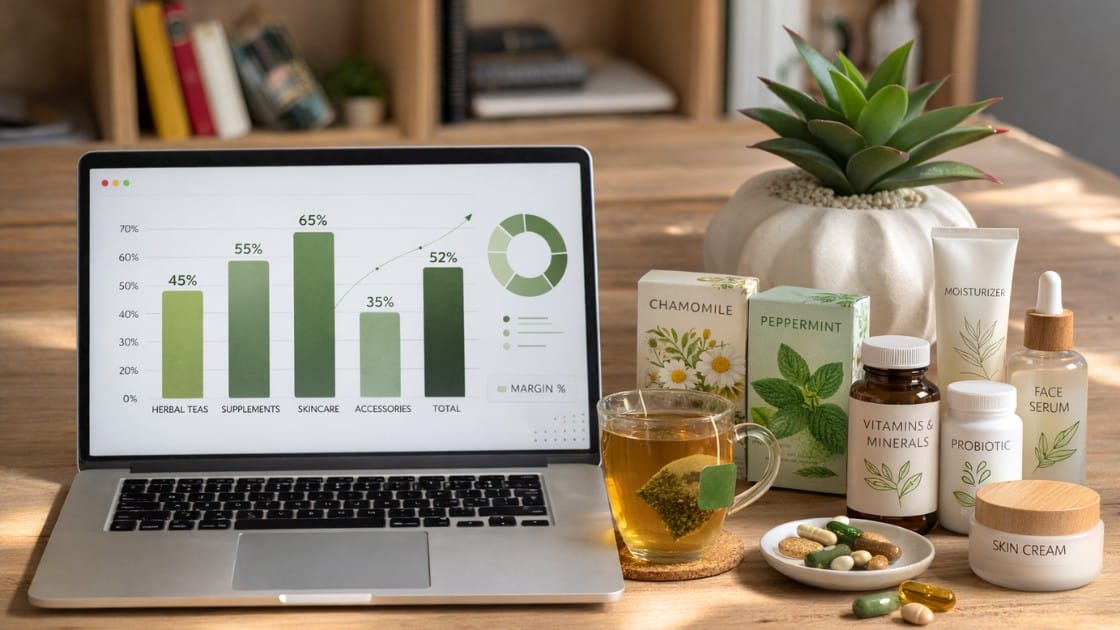
All three niches — herbal teas, supplements, and skincare — can be highly profitable. But they differ significantly in margin structure, entry cost, repeat purchase rate, and brand-building complexity. Skincare offers the highest gross margins (60–80%).
Supplements offer the strongest subscription revenue and repeat purchase rates. Herbal teas offer the lowest entry barrier and fastest launch-to-sale timeline. The "best" niche depends on your creator profile, audience trust, and business model — not just the margin percentage.
Every new wellness founder faces the same question before they build anything.
"Which product should I actually sell?"
The internet gives you a hundred answers. Launch a tea brand. Start with supplements. Skincare is booming. Go with what you know.
But none of that advice means anything without understanding the profit margin reality of each niche — because a wellness brand that looks good but makes no money isn't a brand. It's a very expensive hobby.
The global wellness market is projected to reach $9 trillion by 2028. But "the market is big" is not a business strategy. What matters is where within that market a new founder can build a product brand with real, sustainable margins — especially when starting with a dropshipping or private-label model.
This guide breaks down three of the most popular wellness product niches — herbal teas, supplements, and skincare — across every dimension that affects your real-world profitability: gross margins, entry costs, subscription potential, customer lifetime value, and competitive intensity.
By the end, you'll know exactly which niche fits your brand-building stage — and why choosing wrong costs far more than the product itself.
━━━━━━━━━━━━━━━━━━━━━━━━━━━━━━━━━━━━
What Are Wellness Niche Profit Margins — and Why Do They Vary So Much?
Wellness niche profit margins refer to the percentage of revenue a brand keeps after subtracting the cost of goods sold (COGS) — including product cost, packaging, and fulfilment — before accounting for marketing and overhead.
But gross margin percentage alone is a misleading metric for new founders. A 70% gross margin means nothing if:
- Customers only buy once and never return
- The category requires ₹3–5 lakhs in minimum inventory investment
- Competition is so fierce your customer acquisition cost (CAC) eats the margin entirely
The right framework is not "which niche has the highest margin percentage" but "which niche gives me the best margin structure for a first-time brand owner" — meaning strong gross margins, low entry cost, high repeat purchase rate, and a product category where audience trust transfers from creator to brand.
The 3 Niches Compared: A Full Margin Breakdown
Niche 1: Herbal Teas & Functional Beverages
The herbal tea and functional beverage category has seen extraordinary growth since 2020. Consumers are moving away from sugary drinks toward teas with functional benefits — sleep support, gut health, hormonal balance, immunity, and stress relief.
For new founders, it's also one of the most accessible product niches to enter.
Margin Snapshot:
- Gross margin range: 50–70%
- Typical retail price (private-label): ₹600–₹2,000 per unit / $10–$30
- Cost of goods (drop shipping/private-label): ₹200–₹700
- Entry investment: Low — no minimum inventory required with drop shipping platforms
- Repeat purchase rate: Moderate to high (teas are consumed and replenished)
- Subscription conversion: Moderate — works best when positioned as a daily ritual
Where the Margin Opportunity Is Strongest:
The real margin edge in herbal teas comes from brand positioning, not ingredients. A functional mushroom coffee blend and a basic green tea can cost similar amounts to source — but the mushroom coffee can retail at 3–4x the price with the right brand story.
Functional teas (adaptogens, nootropic blends, sleep teas, hormone teas) command significantly higher price points than standard herbal varieties, with similar COGS. This is a margin story driven by marketing, not manufacturing.
The 27-SKU Coffee & Tea catalogue on platforms like Supliful — including mushroom coffee, matcha, and hemp blends — makes this niche very accessible for dropshipping-based brand launches.
Where Margins Compress:
- Generic positioning (e.g., "green tea for weight loss") puts you in a price war with mass-market brands
- Without a strong brand story, customers compare prices on packaging alone
- Tea sachets and bulk formats have lower perceived value than premium blends in branded pouches or canisters
Ideal Founder Profile for Teas:
Yoga educators, Ayurveda practitioners, mindfulness creators, slow-living influencers, morning ritual content creators, and hormonal wellness educators. These creators already have audiences pre-sold on the ritual of a daily tea — making the product launch feel like a natural extension of their content.
VERDICT: Strong entry-point niche with excellent dropshipping accessibility. Margin potential is highest when paired with strong brand positioning and functional benefit storytelling.
Niche 2: Wellness Supplements
The dietary supplement market is the backbone of the modern wellness industry — and for good reason. Supplements solve specific, measurable problems. They have natural monthly replenishment cycles. And when positioned well, they build some of the highest customer lifetime values in wellness e-commerce.
Margin Snapshot:
- Gross margin range: 55–75%
- Typical retail price (private-label): ₹900–₹3,500 per unit / $12–$45
- Cost of goods (dropshipping/private-label): ₹300–₹900
- Entry investment: Low-to-moderate with dropshipping platforms
- Repeat purchase rate: High — most supplements are consumed in 30–90 days
- Subscription conversion: Highest of all three niches (probiotics, protein, hormone support are all monthly purchases)
Where the Margin Opportunity Is Strongest:
Supplements have a structural advantage over almost every other wellness product category: consumability.
Unlike a serum or a canister of tea that lasts 60 days, a probiotic supplement or a protein powder has a defined use-up rate — typically 30 days. This creates a natural, predictable reorder cycle that is the foundation of subscription revenue.
Subscription revenue is the holy grail of wellness e-commerce because it dramatically reduces customer acquisition cost over a customer's lifetime. A customer who subscribes at ₹1,500/month generates ₹18,000 per year in revenue from a single acquisition event.
The supplement categories with the strongest margin-to-demand ratio for new founders include:
- Probiotics & Digestive Support — highest subscription conversion in the category
- Women's Hormonal Supplements (Maca, Magnesium, Women's Vitality) — premium price point with deep audience trust
- Sleep & Relaxation (Ashwagandha, Magnesium Glycinate, 5-HTP) — universal pain point, low competition from creator-led brands
- Greens & Superfoods — high perceived value, daily consumption cycle
- Brain & Cognitive (Lion's Mane, NAD+) — premium positioning, fast-growing niche
Where Margins Compress:
- Commoditized supplements (basic Vitamin C, generic multivitamins) face extreme price competition from pharmacy brands
- Regulatory compliance requirements add cost and complexity, especially for health claims
- Customer skepticism is higher for supplements than for teas or skincare — trust signals and brand credibility are non-negotiable
Ideal Founder Profile for Supplements:
Fitness coaches, transformation creators, gut health educators, PCOS and hormonal wellness educators, sleep coaches, mental wellness creators, Ayurveda practitioners, and nutrition educators. Any creator who has built audience trust around a specific health outcome is well-positioned to launch a supplement brand in that category.
Verdict: Highest long-term revenue potential driven by subscription economics and repeat purchase rates. Best margin structure when paired with strong niche positioning and creator trust. Requires more compliance attention than teas.
Niche 3: Skincare & Beauty Wellness
Skincare is the glamour category of wellness e-commerce — and for good reason. It has the highest gross margins of any physical wellness product category. It photographs beautifully. And for creator-led brands, the transition from skincare content to skincare brand is one of the most natural pivots in the wellness space.
Margin Snapshot:
- Gross margin range: 60–80%
- Typical retail price (private-label): ₹800–₹4,000 per unit / $12–$60
- Cost of goods (dropshipping/private-label): ₹200–₹800
- Entry investment: Low with dropshipping (no minimum stock required)
- Repeat purchase rate: Moderate — serums and moisturisers last 30–60 days
- Subscription conversion: Moderate — works best with curated monthly skincare kits
Where the Margin Opportunity Is Strongest:
Skincare has the most premium pricing ceiling of any wellness niche. A 30ml vitamin C serum that costs ₹300–₹400 to produce can comfortably retail at ₹1,800–₹3,000 under a credible private-label brand — a 4–5x markup.
The perceived value of skincare is heavily influenced by branding, packaging, and ingredient storytelling. A beautifully branded serum in elegant packaging with clear ingredient benefits commands significantly higher price points than the same product in generic packaging.
Skincare also benefits from the "shelfie effect" — customers photograph their skincare collections and share them, creating organic, earned visibility for well-designed brands.
The Facial Care category on Supliful alone has 23 SKUs — the single largest sub-category in the entire catalogue — giving skincare brands the widest product launch menu of any niche.
Where Margins Compress:
- The skincare market is the most saturated of all three niches — premium D2C skincare brands, celebrity-backed lines, and established pharmacy brands all compete for the same customer
- Customer acquisition cost is higher because paid advertising in beauty is extremely competitive
- Returns and refund rates can be higher — skin sensitivities and reactions are real
- The "results" cycle is longer — customers may need 4–8 weeks to see outcomes, requiring strong retention and education systems to prevent churn
Ideal Founder Profile for Skincare:
Skincare educators, acne and gut-skin connection creators, inside-out beauty advocates, natural skincare influencers, non-toxic beauty creators, and hair and glow content creators. Founders with a strong visual aesthetic and a knack for ingredient-led education have a major advantage here.
VERDICT: Highest gross margin percentage of the three niches. Strong visual branding opportunity. Best results when founder has established credibility in skincare content and a visually strong brand identity.
Side-by-Side Comparison Table
| METRIC | HERBAL TEAS | SUPPLEMENTS | SKINCARE |
|---|---|---|---|
| Gross Margin Range | 50–70% | 55–75% | 60–80% |
| Typical Retail Price | ₹600–₹2,000 | ₹900–₹3,500 | ₹800–₹4,000 |
| Entry Investment (Dropship) | Very Low | Low | Low |
| Repeat Purchase Rate | Moderate-High | High | Moderate |
| Subscription Conversion | Moderate | Highest | Moderate |
| Customer Lifetime Value | Medium | Highest | High |
| Compliance Complexity | Low | Moderate | Moderate |
| Visual Branding Impact | High | Moderate | Highest |
| Creator-to-Brand Transfer | Very Natural | Very Natural | Very Natural |
| Market Saturation | Moderate | High | Very High |
| Catalogue Depth (Supliful) | 27 SKUs | 100+ SKUs | 51 SKUs (across 5 categories) |
| Best for Subscription Model | Partial | Yes | Partial |
Which Niche Is Right for You? A Decision Framework
The "best margin" niche is not universal — it depends entirely on your starting position as a founder.
Choose Herbal Teas If:
- You want to launch quickly with minimum friction
- Your audience is built around ritual, mindfulness, Ayurveda, or slow living
- You want a physical product brand with low regulatory complexity
- You're testing a brand concept before committing to a full supplement line
- You're a morning ritual or holistic lifestyle creator
Choose Supplements If:
- You've built audience trust around a specific health outcome (gut health, hormones, sleep, fitness)
- You want to build recurring subscription revenue and high customer lifetime value
- You're a health educator, fitness coach, or wellness creator with a results-focused audience
- You're willing to invest in trust architecture, compliance, and customer education
- You want the strongest long-term brand equity in wellness
Choose Skincare If:
- You have a strong visual brand aesthetic and a content-heavy presence
- Your audience already looks to you for skincare recommendations
- You want the highest gross margin per unit sold
- You're willing to invest in packaging quality and ingredient storytelling
- You're an acne educator, natural beauty creator, or gut-skin connection advocate
The Hybrid Advantage:
Many of the most successful creator-led wellness brands don't choose one niche exclusively. They start with one category to validate their audience and brand, then expand.
Examples of powerful hybrid stacks:
- Gut health supplement brand + herbal detox tea range
- Women's hormonal supplement line + skincare-from-within products (collagen, hair skin & nails)
- Functional mushroom coffee brand + cognitive supplement stack
Starting with one niche and expanding into a complementary second category after 6–12 months is often the most profitable long-term strategy.
The Dropshipping Advantage: Why Margin Math Changes for Smart Founders
One of the most significant margin improvements available to new wellness founders in 2026 is the private-label dropshipping model.
Traditional product brands require:
- Minimum order quantities of 500–2,000 units
- Upfront manufacturing costs before a single sale
- Warehousing, logistics, and fulfilment management
- Risk of unsold inventory
Private-label dropshipping platforms change all of this. Platforms like Supliful offer:
- Zero minimum order quantities — you pay per order, not per batch
- Pre-formulated, tested, and compliant products ready for your label
- Automated order fulfilment directly to your customer
- No inventory holding costs
For wellness founders launching from a creator base, this model means you can price at full retail margin (50–80%) without the capital risk of traditional manufacturing.
The margin mathematics are simple:
EXAMPLE (Supplement, Dropshipping Model):
- Retail price set by you: ₹1,800
- Product cost per unit (Supliful): ₹550
- Gross margin: ₹1,250 / 69%
- Customer acquires via your existing content — zero paid ad spend
- Customer subscribes monthly: ₹1,250 × 12 = ₹15,000 annual gross profit from one customer
This is the margin model that creator-led wellness brands are built on. Your audience trust is the acquisition channel. The product is the monetisation. The brand is the asset.
5 Margin Mistakes New Wellness Founders MakeE
Understanding niche margins is only half the picture. Here are the most common margin mistakes that quietly destroy profitability for new founders:
- Underpricing Out of Fear
New founders often price too low to compete with established brands. In wellness, underpricing signals lower quality — not accessibility. Price to reflect the brand value you're building, not just the product cost. - Ignoring Customer Acquisition Cost
A 70% gross margin collapses to 20% if you spend heavily on paid ads to acquire every customer. The most profitable wellness brands use organic content and creator audiences to acquire customers — then convert to subscriptions to extend lifetime value. - Choosing Niche Based on Trend, Not Trust
Launching a collagen brand because collagen is trending — but your audience follows you for mental wellness content — is a mismatch. Your audience trust is your most valuable margin asset. The niche that maps to your existing credibility will always outperform the trending niche. - Skipping Subscription Infrastructure
One-time sales are hard margin work. Subscription revenue is leveraged margin work. Every wellness brand — regardless of niche — should have a subscription offer built in from Day 1. - Launching Without A Brand Identity
Generic products with no brand story compete on price. Branded products with clear positioning, founder trust, and a compelling story compete on value. Margin is always higher in value competition than price competition.
Frequently Asked Questions
Q1. Which wellness niche has the highest profit margins?
Skincare has the highest gross margin percentage at 60–80%, driven by premium pricing potential and low production costs. However, supplements offer the best overall profit structure for new founders due to high repeat purchase rates, strong subscription conversion, and broad audience trust — making customer lifetime value significantly higher.
Q2. Is herbal tea a profitable business for new wellness founders?
Yes. Herbal teas have gross margins of 50–70%, require low entry investment, and offer natural repurchase cycles. Profit is maximised when teas are positioned as functional (sleep, gut, hormonal) and sold as part of a daily ritual subscription — rather than competing on price with mass-market tea brands.
Q3. Are supplements more profitable than skincare for a new brand?
Supplements typically generate higher long-term profitability due to monthly replenishment cycles and subscription revenue potential. Skincare has higher per-unit margins but lower repeat purchase frequency. For founders prioritising recurring revenue and customer lifetime value, supplements offer the stronger business model.
Q4. How much can a new wellness brand make in its first year?
This depends heavily on audience size, niche, and business model. A wellness creator with 10,000–50,000 engaged followers launching a private-label supplement brand with a subscription model can realistically generate ₹5–₹20 lakhs in Year 1. Brands that combine digital products with physical products typically reach profitability faster.
Q5. Can I start a wellness product brand with no inventory?
Yes. Private-label dropshipping platforms allow wellness founders to sell branded products without holding inventory. You pay per order, not per batch — meaning zero upfront manufacturing cost, zero warehousing fees, and full retail margins on every sale. This model is ideal for creator-led brands in all three niches
━━━━━━━━━━━━━━━━━━━━━━━━━━━━━━━━━━━━
Herbal teas, supplements, and skincare each have a compelling case.
Teas win on accessibility and launch speed. Supplements win on subscription economics and long-term customer value. Skincare wins on gross margin per unit and visual brand equity.
But the real answer to "which niche has the best profit margins" is this: the one that matches your audience's trust, your content credibility, and your brand's positioning story.
Margin is not just a product maths problem. It's a brand strategy problem.
The founders who understand this — who pick the niche that maps to their existing influence, build a brand identity before they build a store, and turn one-time buyers into monthly subscribers — are the ones who build wellness brands that last.
The wellness market isn't waiting. Your audience isn't either.